Why fresh air became a NYC problem
For most of the last century, city homes breathed through their own leaks — drafty windows, gaps around old frames, chimneys quietly pulling air. That "natural ventilation" was wasteful, but it kept air moving. Two things changed. We spent years tightening buildings to cut energy bills — new windows, weatherstripping, insulation, spray foam — and a tight home holds heat beautifully, but it also holds everything else: cooking fumes, cleaning-product vapors, moisture, dust, and the CO₂ you exhale all night. At the same time, the outdoor air has had some genuinely bad days. The June 2023 wildfire smoke that turned the sky orange pushed the city's air-quality index past 400, and smoke season has kept coming back. When the outside air is the problem, cracking a window isn't a fix.
An energy recovery ventilator is the appliance that squares that circle. It brings in a steady, controlled stream of filtered fresh air and pushes the stale air out — without throwing away the heating or cooling you already paid for.
The short version: a tighter, more efficient home needs a deliberate way to breathe. An ERV is that way — mechanical fresh air that keeps most of your energy indoors.
What an ERV actually does
At its heart, an ERV is two fans and a clever exchange core. One fan pulls stale air out of the house; the other draws fresh air in from outside. The magic is where those streams cross. Inside the core they run right past each other — never mixing — and the outgoing air hands off most of its energy to the incoming air. In winter, the warm air on its way out preheats the cold air coming in, so your furnace isn't starting from zero. In summer, the cool conditioned air leaving takes heat and humidity out of the muggy air arriving. A filter cleans the incoming stream along the way. The payoff is a constant supply of tempered, filtered fresh air at a fraction of the energy loss you'd get from an open window.
Because the core swaps both heat and moisture, a good ERV recovers a large share of the energy that would otherwise walk out the vent — which is exactly why you can ventilate continuously without watching your utility bill climb.
ERV vs. exhaust fan — why your bath fan isn't enough
Most homes already have exhaust fans over the stove and in the bathroom, so it's fair to ask why those don't cover it. An exhaust fan only does half the job: it pushes air out, which drops the pressure inside, and the missing air gets replaced by whatever leaks back in — unfiltered, untempered, through any gap it can find. That's useful for clearing a burst of steam or odor, but it isn't a whole-home strategy. An ERV is balanced: it removes and supplies air in equal measure, filters what comes in, and recovers the energy on the way through.
| Exhaust fan | ERV | |
|---|---|---|
| What it does | Pushes air out of one room | Balanced fresh-air exchange for the whole home |
| Air direction | One way — out only | Two ways — supplies and removes equally |
| Incoming air | Leaks in unfiltered wherever it can | Drawn in through a filter, on purpose |
| Energy | Throws conditioned air straight out | Recovers most of the heat / cooling |
| Humidity | No control | Balances moisture in and out |
| Runs | In bursts, when you flip it on | Continuously, quietly, low wattage |
| Best for | Spot moisture & odor (bath, kitchen) | Whole-home air quality in a tight house |
| Typical cost | $150–$600 installed | $2,000–$6,000 installed |
They're not really competitors — they solve different problems. Keep the exhaust fans for spot moisture and smells; add an ERV when the goal is clean air throughout a tight home.
ERV vs. HRV — which core suits NYC
You'll see HRV — heat recovery ventilator — mentioned right alongside ERV. The hardware is nearly identical; the difference is the core. An HRV moves heat only. An ERV moves heat and moisture. For NYC's climate — sticky, humid summers and dry, heated winters — that moisture transfer usually wins. In summer the ERV keeps some of the outdoor humidity from riding indoors; in winter it holds moisture inside instead of letting the air go bone-dry. HRVs make more sense in strictly cold, dry climates or spaces that generate their own moisture. For a typical Brooklyn or Queens home, the ERV's enthalpy core is the more comfortable match.
Ducted vs. ductless — what fits your place
Whole-house (ducted). The ERV ties into ductwork — either sharing an existing forced-air system or running its own dedicated supply and return registers. This gives the best air distribution and is the natural choice if you already have central air. It costs more, and in plaster-walled pre-war construction, running dedicated ducts is real work.
Point-of-use (ductless). A compact unit mounts on an exterior wall and ventilates a single room or zone. It needs only a core hole through the wall and power, which makes it far cheaper and less invasive — a strong fit for a co-op bedroom, a finished basement, or one specific problem room where threading ducts through a brownstone just isn't realistic.
What an ERV costs in NYC
Nationally, a full ERV install runs roughly $2,000 to $6,000. NYC tends toward the upper end — labor runs higher here, and dedicated ducts through older construction add hours. A rough breakdown:
- The unit: about $800–$2,500, depending on capacity and core quality.
- Install & ductwork: about $1,200–$3,500+, the biggest variable — tying into existing ducts is cheaper than a fully dedicated network.
- Running cost: ERVs sip power — on the order of 40–50 watts, roughly $40–$70 a year — and usually save more than that by easing the load on your heating and cooling.
A ductless point-of-use unit for a single room lands well below that — often under $1,500 installed — because there's no duct network to build.
What moves the price
- Home size & coverage — more square footage and more rooms means more airflow and more duct.
- Existing ducts vs. dedicated — tying into your current system is the cheaper path; a fully separate supply-and-exhaust network costs more but distributes air best.
- Core type — an enthalpy (moisture-transferring) core costs a little more than a heat-only one.
- Controls — a basic wall switch is cheap; smart humidity- or CO₂-sensing controls that run the unit only when the air needs it add a few hundred dollars and earn it back in efficiency.
- Access — a tight mechanical closet or a finished ceiling that has to be opened adds labor. Retrofits cost more than units planned into a gut renovation.
The electrical side — what we handle
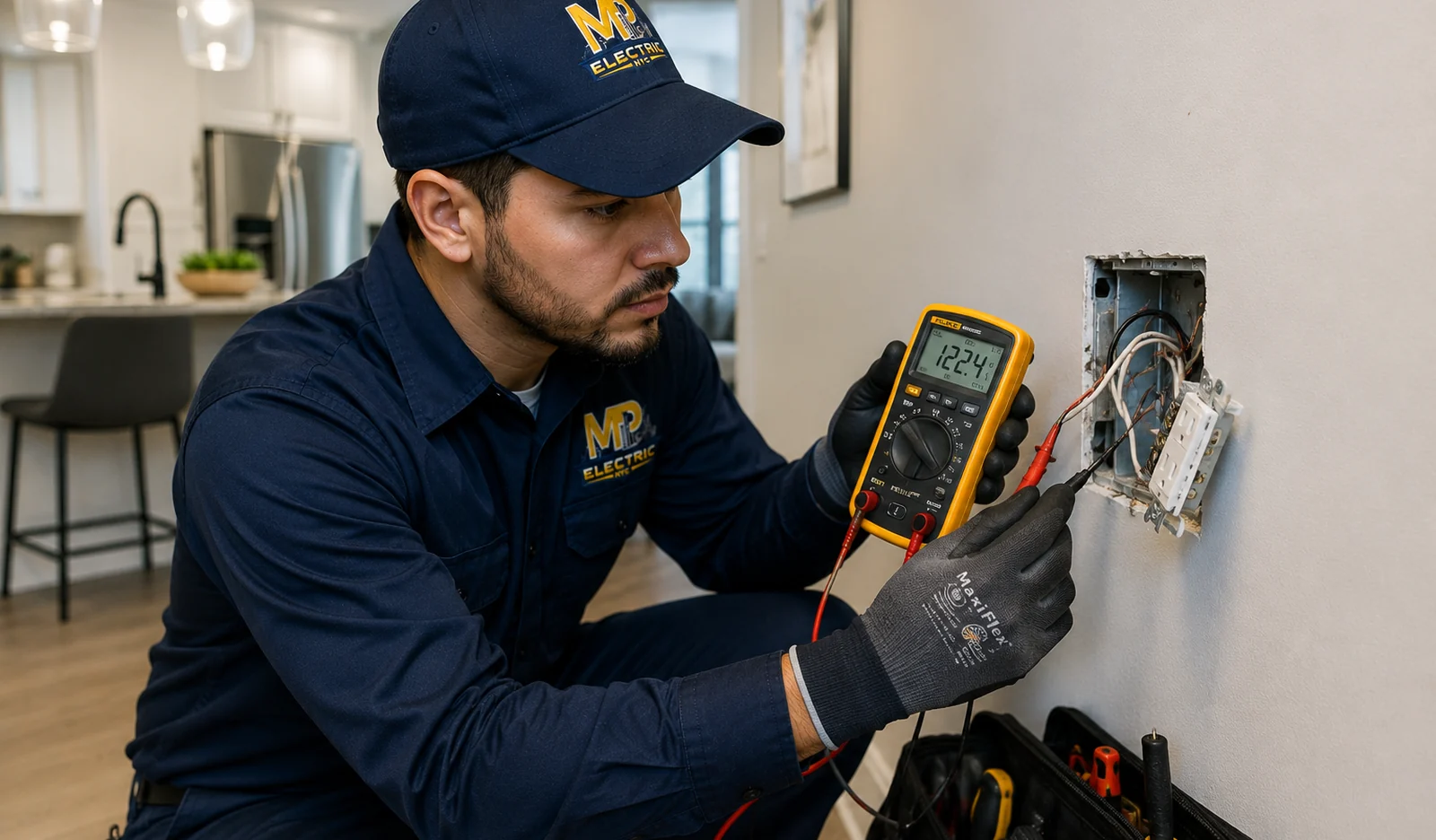
An ERV is, in the end, an electrical appliance: it needs a properly wired circuit, a nearby disconnect, and — if you want it to run intelligently — controls wired to humidity or CO₂ sensors. That's our side of the job. We run the dedicated circuit, wire and mount the unit, install the controls, and make the wall penetration for a ductless system. For a fully ducted whole-home ERV we coordinate with the ductwork so the electrical is done right and to NYC code.
And the ERV's simpler cousins — bath and kitchen exhaust fans, inline ventilation fans, timer and humidity-sensing switches — those we do start to finish. If your goal is just better air in one room, a smart exhaust upgrade might be all you need. If it's whole-home fresh air, an ERV is the right tool. We'll tell you honestly which one fits, and put the price in writing before anything starts.
Frequently Asked Questions
Older homes used to leak enough air to get by. Once you tighten one up with new windows, insulation, and air sealing, it can trap moisture, cooking fumes, and CO₂ indoors. If your home feels stuffy, windows sweat, or smells linger, that's a ventilation signal — and an ERV solves it without giving back the efficiency you gained.
With the right filter, yes — it pulls outdoor air through a filter, so it's far better than an open window. Standard cores use modest filters, though, so on heavy-smoke days you'd pair the ERV with stronger filtration or a recirculating air purifier, or simply run it less while the AQI is spiking.
It depends on the goal. A better exhaust fan clears moisture and odor from one room. An ERV supplies filtered fresh air to the whole home and recovers energy. For a single stuffy bathroom, the fan is the answer; for whole-home air quality, it's the ERV.
Very little — roughly 40 to 50 watts, about $40 to $70 a year in electricity. It typically saves more than that by pre-conditioning incoming air so your heating and cooling systems work less.
Often yes, especially a ductless point-of-use unit that only needs an exterior wall and power. Co-op and condo installs usually require board approval and may fall under an alteration agreement — we can work within that process.
Usually an ERV. Its core transfers moisture as well as heat, which suits NYC's humid summers and dry, heated winters. An HRV moves heat only and makes more sense in strictly cold, dry climates.