What NYC actually requires — smoke, CO, and now gas
NYC's detector requirements are layered across several local laws, and they've tightened steadily. The current picture for residences:
Smoke alarms: required inside or within 15 feet of every sleeping area and on every level of the dwelling. Battery-operated units must be sealed 10-year models — the replaceable-9V-battery alarms no longer satisfy code for new installations. In new construction and major renovations, alarms must be hardwired and interconnected, so every alarm in the home sounds together.
Carbon monoxide detectors: required within 15 feet of every sleeping area in any dwelling with fuel-burning appliances (gas stove, boiler, furnace, water heater) or an attached garage — which describes nearly every NYC home. CO units have an expiration date (typically 5–10 years); expired units are non-compliant even if they chirp on test.
Natural gas alarms — the new one: under Local Law 157, NYC now requires natural gas detectors in residences with gas service, per DOB rules that took effect in 2025. Placement follows the device listing — generally near gas appliances. Most buildings and many homeowners haven't caught up yet; if your home has a gas stove or boiler and no gas alarm, you're likely out of compliance.
Landlords: owners must install and maintain smoke and CO detectors in rental units, and HPD violations for missing or expired detectors are among the most common — and most easily avoided — citations. We offer multi-unit compliance packages with documentation for your records.
Cook with gas? Local Law 157 requires a natural gas alarm in NYC residences with gas service — and a CO detector doesn’t satisfy it. See what LL157 requires and where each device goes.
Hardwired & interconnected — why it's worth it even when not required
The difference between a $40 battery alarm and a hardwired interconnected system shows up at 3am.
Interconnection means every alarm sounds together. A fire that starts in a basement or kitchen triggers the alarm in your bedroom immediately — not after smoke has traveled two floors. In NYC's vertical homes — brownstones, duplexes, townhouses — this is the feature that buys escape time, because the alarm nearest the fire is often the one farthest from where you sleep.
Hardwiring eliminates the dead-battery failure mode, with battery backup for outages. Modern interconnected systems can also link wirelessly where running interconnect wire through finished walls isn't practical — we install listed wireless-interconnect hardwired units that satisfy code without opening plaster.
Smart detectors (Nest Protect and similar) add phone alerts, hush-from-app, and self-testing. They're a strong choice for landlords and anyone who travels — you'll know an alarm is sounding in your apartment even when you're not in it. We install and configure them as combination smoke/CO coverage where their listing allows.
What an installation visit includes
Compliance walkthrough
We map your dwelling against current NYC requirements — sleeping areas, levels, fuel-burning appliances, gas service — and identify every required location, including LL157 gas-alarm placement.
Existing unit audit
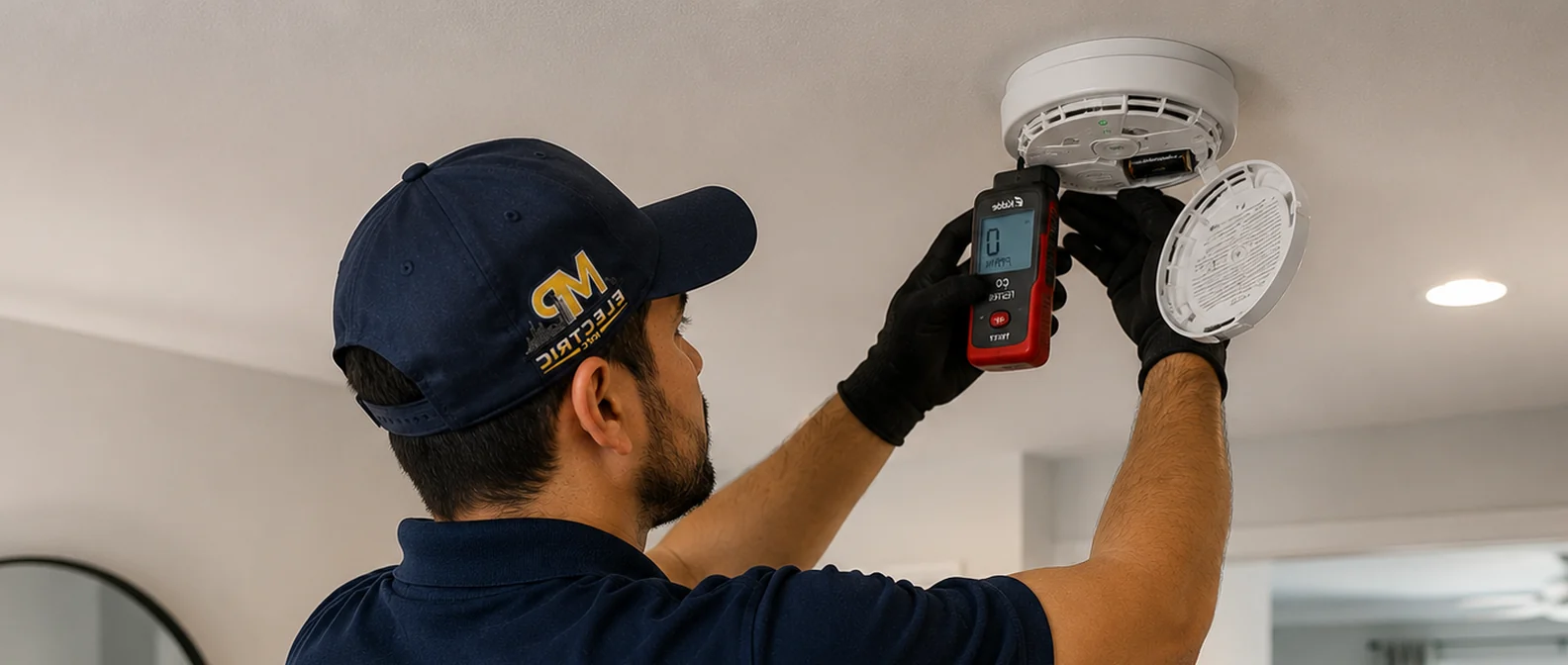
Every existing detector is checked for expiration date, sensor type, and placement. Expired and obsolete units are flagged and removed.
Installation
Hardwired units wired and interconnected (wired or listed wireless interconnect), sealed 10-year battery units mounted where hardwiring isn't required, gas alarms placed per listing near gas appliances.
Test & verify
Full system test — every alarm triggered, interconnect verified, CO and gas units tested per manufacturer procedure.
Documentation
You receive a dated record of locations, models, and expiration dates — what landlords need for HPD, what sellers need at closing, what everyone needs for insurance.
Service areas & related work
Frequently asked questions
Sealed 10-year battery units run $120–$160 installed. Hardwired detectors replacing existing hardwired units run $160–$250. Hardwired units requiring new wiring run $220–$350. Whole-apartment and multi-unit landlord packages are quoted by count — per-unit pricing drops meaningfully at volume.
Smoke alarms: inside or within 15 feet of each sleeping area and on every level. CO detectors: within 15 feet of sleeping areas if you have any fuel-burning appliance or attached garage. Gas alarms (LL157): near gas appliances per the device listing. We map exact locations during the walkthrough.
LL157 added natural gas detectors to NYC's requirements — if your residence has gas service (a gas stove, boiler, or water heater), gas alarms are now required under DOB rules effective 2025. Most homes we visit don't have them yet. We install compliant units as part of any detector package.
Owners must install and maintain smoke and CO detectors in every rental unit, using compliant models (sealed 10-year battery or hardwired), and now gas alarms where LL157 applies. Missing or expired detectors are common HPD violations. Our multi-unit packages include dated documentation for your compliance records.
Sealed 10-year units — no replaceable battery to remove, no chirp-and-disable cycle, and they're what code now requires for battery-operated installations anyway. For the strongest protection, hardwired interconnected units with battery backup end the problem entirely.
Yes. Listed wireless-interconnect hardwired alarms link by radio instead of a physical interconnect wire — every alarm still sounds together, with no wall opening. It's our standard approach in finished pre-war apartments.
What our customers say
"They brought our 6-unit Bushwick building fully up to code — smoke, CO, and the new gas detectors I didn't even know were required. Every unit documented with photos and dates. HPD inspection passed clean."
"Hardwired interconnected alarms through our three-floor brownstone using the wireless-link units — zero holes in our plaster. Tested every alarm before leaving. The whole house sounds together now."
"Quick, clean install of Nest Protects plus a gas alarm by the stove in our Forest Hills co-op. They handled the board notification and the placement was clearly thought through, not just slapped near the ceiling."
How did we do?
Tap a star to rate your experience with MP Electric NYC
★★★★★ Loved the work? You'll be sent to Google to share it.
Help us make it right
Thanks for the honest feedback — tell us what happened and we'll follow up personally.
Get code-compliant detector coverage
One visit: compliance walkthrough, expired-unit audit, installation, full test, and dated documentation. Single apartments to entire buildings.