The deadline was January 1, 2025. It is now well behind us.
Local Law 88 gave building owners more than a decade of notice. It passed in 2009 as part of the Greener Greater Buildings Plan, was amended along the way, and landed on a firm compliance date of January 1, 2025. That date has come and gone. If your building is covered and the filing was never made, the building is not simply "behind" — it is carrying an open compliance exposure that does not resolve on its own.
The uncomfortable part is the arithmetic. The cost of doing the work has not changed. The cost of not doing it goes up every quarter it stays unresolved.
The one-line version: LL88 penalties are not a single ticket you pay and forget. The violation stays open until the work is done and certified — and that is what makes waiting expensive.
Does it apply to your building?
Local Law 88 covers what the city calls "covered buildings":
- Any building larger than 25,000 square feet
- Two or more buildings on the same tax lot that together exceed 100,000 square feet
- Two or more buildings governed by the same condominium board that together exceed 100,000 square feet
That sweeps in a great many NYC properties — office buildings, mixed-use, retail, and larger residential buildings with commercial or common areas. If you are not sure, your managing agent or engineer can confirm against the city's covered-buildings list in a few minutes. It is worth the phone call.
What LL88 actually requires
Two distinct obligations, and buildings routinely satisfy one while missing the other.
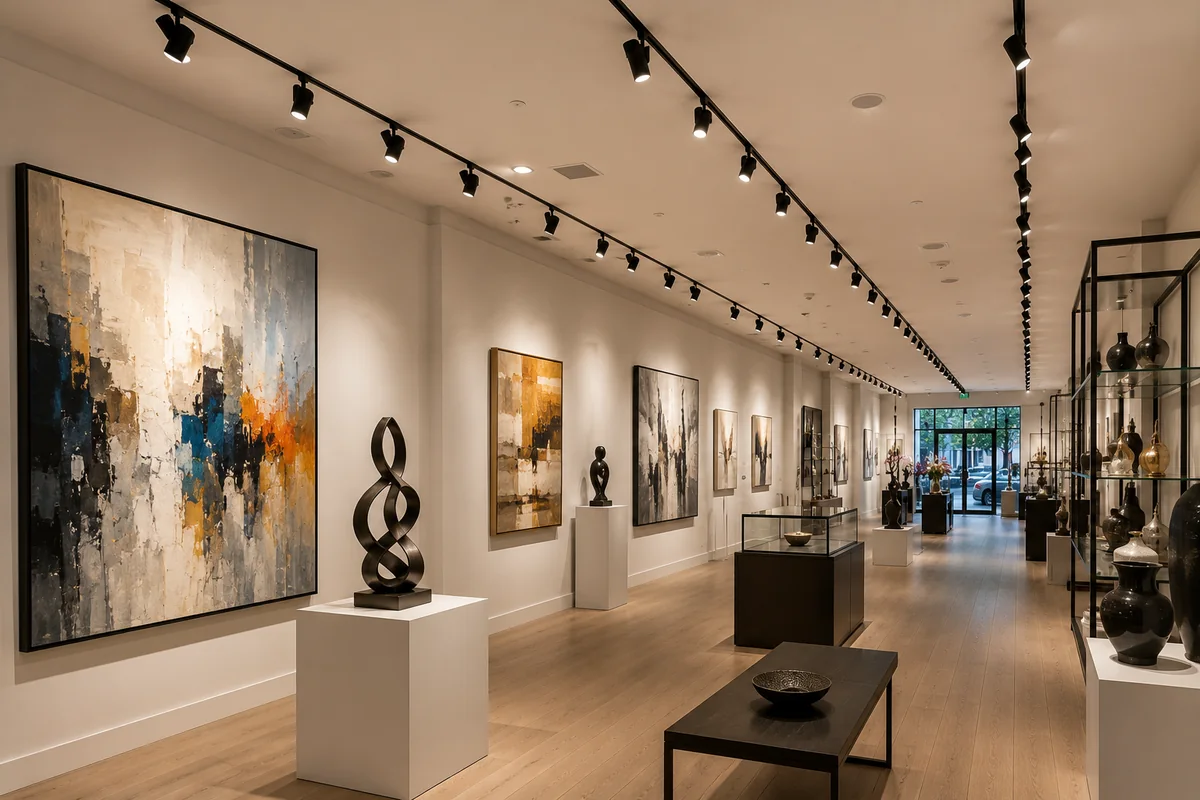
1. Lighting upgrades. Lighting in covered non-residential areas must be brought up to the NYC Energy Conservation Code. In practice that means replacing outdated fixtures and lamps with compliant LED, and adding the controls the code expects — occupancy sensing, daylight response, and proper switching. Common areas, corridors, garages, back-of-house, and tenant spaces all come into scope. Residential dwelling units are generally excluded from the lighting requirement.
2. Electrical sub-metering. Large non-residential tenant spaces must have sub-meters installed so each tenant's electricity use is measured separately, with monthly statements provided to the tenant. The square-footage threshold for an individual tenant space is commonly cited at 5,000 square feet — confirm the exact applicability for your building with your engineer, since how spaces are demised affects the answer.
Compliance is certified by a registered design professional and filed with the Department of Buildings. The filing is what actually closes the loop — the work alone, undocumented, does not.
Why the late fees are the real problem
Owners tend to picture a parking ticket: one fine, pay it, done. That is not how an open building-code violation behaves.
The violation is tied to a condition, not to a single date. Until the condition is corrected and the certification filed, the building remains non-compliant — and the exposure recurs. Add the practical costs that ride alongside it: violations surface in due diligence during a refinance or sale, they complicate other DOB filings, and they can strain relationships with tenants who are entitled to the sub-metered statements they are not receiving.
Meanwhile the underlying job — the LED retrofit and the sub-meters — costs what it costs. Waiting does not shrink it. It simply adds the penalties on top.
On specific dollar amounts: penalty schedules are updated periodically, and repeating a stale figure would not serve you. Confirm current amounts directly with the Department of Buildings or your compliance consultant. What matters for the decision is the structure, not the exact number: it recurs while the violation stays open.
If your building is over 25,000 sq ft and you are not certain the LL88 filing was made, that is worth answering this week — not next quarter. We will assess the lighting and sub-metering scope, coordinate with your engineer, and put the work in writing.
LL88 vs. LL97 — companions, not the same law
These get conflated constantly. Local Law 97 caps your building's carbon emissions with ongoing annual reporting. Local Law 88 is a one-time upgrade — lighting and sub-metering — that you complete, certify, and close out.
| Local Law 88 | Local Law 97 | |
|---|---|---|
| What it targets | Lighting upgrades & tenant sub-metering | Building-wide carbon emissions |
| Who it covers | Buildings over 25,000 sq ft | Buildings over 25,000 sq ft |
| Key deadline | January 1, 2025 — already passed | Caps tighten through 2030 and beyond |
| How you comply | One-time upgrade + certified filing | Ongoing annual emissions reporting |
| Exposure if ignored | Violation stays open, penalties recur | Annual penalty per ton over the cap |
| Electrical work involved | LED retrofit, controls, sub-meters, panel work | Electrification, service upgrades, EV, heat pumps |
The practical link: the LED retrofit you do for LL88 lowers your electrical load, and the sub-meters give you the consumption data that makes LL97 planning far less of a guess. Buildings that treat them as one project generally spend less than those that treat them as two.
What the work involves
For most covered buildings, LL88 compliance breaks into a predictable scope:
- Lighting survey — a fixture-by-fixture inventory of what exists and what has to change.
- LED retrofit — compliant fixtures and lamps throughout the covered areas.
- Controls — occupancy sensors, daylight harvesting, and switching that satisfies the energy code.
- Sub-meter installation — metering equipment per qualifying tenant space, with the wiring and panel work that goes with it.
- Panel and circuit work — often needed to separate tenant loads cleanly for metering.
- Coordination and certification — working with your registered design professional so the filing is accurate.
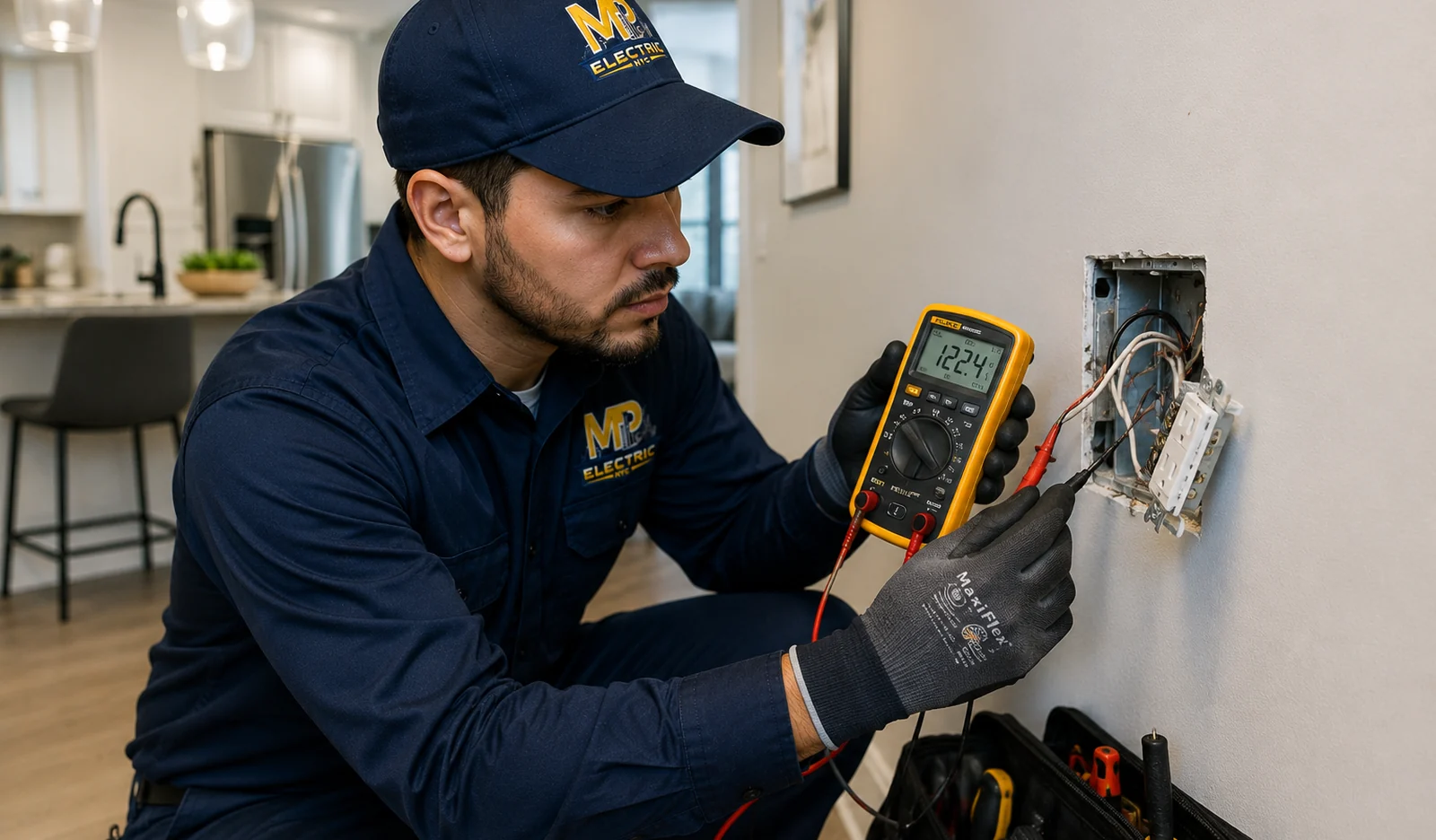
That is commercial electrical work and lighting retrofit work — squarely what we do, across all five boroughs.
What to do this week
First, confirm your status. Ask your managing agent whether the LL88 filing was made. A surprising number of buildings assume it was handled and find out otherwise.
Second, scope the work. If it was not filed, you need to know what the lighting and sub-metering scope actually is before you can budget it. We will walk the building and put it in writing.
Third, close it out. Do the work, get it certified, file it. That is what ends the exposure — and it is the only thing that does.
Fair caveat: compliance rules, thresholds, and penalty schedules change. This is general guidance, not legal or compliance advice. Confirm specifics for your building with the NYC Department of Buildings, your engineer of record, or a compliance consultant.
Frequently Asked Questions
It covers buildings over 25,000 square feet, and also groups of buildings on one tax lot — or under one condominium board — that together exceed 100,000 square feet. If your property is on the city's covered-buildings list, it applies. Your managing agent or engineer can confirm quickly.
No. It is late, but the fix is the same work it always was. What changes is that an open violation keeps generating exposure until it is corrected and certified. Getting it closed stops the meter running.
Two things. First, lighting in covered non-residential spaces must be upgraded to meet the NYC Energy Conservation Code. Second, large non-residential tenant spaces need electrical sub-meters, with tenants receiving monthly usage statements. Residential dwelling units are generally excluded from the lighting requirement.
NYC issues violations for non-compliance, and the exposure recurs rather than resolving with a single payment — that is the part owners underestimate. Because penalty schedules are periodically updated, confirm current amounts with the Department of Buildings or your compliance consultant rather than relying on a figure you read online.
No, though they are companions. LL88 is a one-time upgrade — lighting and sub-metering — with a filing to prove it. LL97 is an ongoing carbon-emissions cap with annual reporting. Many buildings address them together, since the LED and metering work under LL88 also helps LL97 numbers.
A registered design professional certifies compliance and files it with the Department of Buildings. The electrical work itself — the LED retrofit, controls, sub-meter installation, and any panel work — is performed by a licensed electrical contractor. We coordinate directly with your engineer of record.