// Compare · Hardwired Charger vs Plug-In (NEMA 14-50) · NYC
Hardwired Charger vs Plug-In (NEMA 14-50)
Installing a Level 2 charger comes down to two mounting methods: hardwired to the circuit, or plugged into a NEMA 14-50 outlet. Here's the safety, speed, and cost comparison for NYC homes.
Hardwired Charger
Permanently wired — safest at high continuous load
Plug-In (NEMA 14-50)
Plugs into a 240V outlet — portable, easy to swap
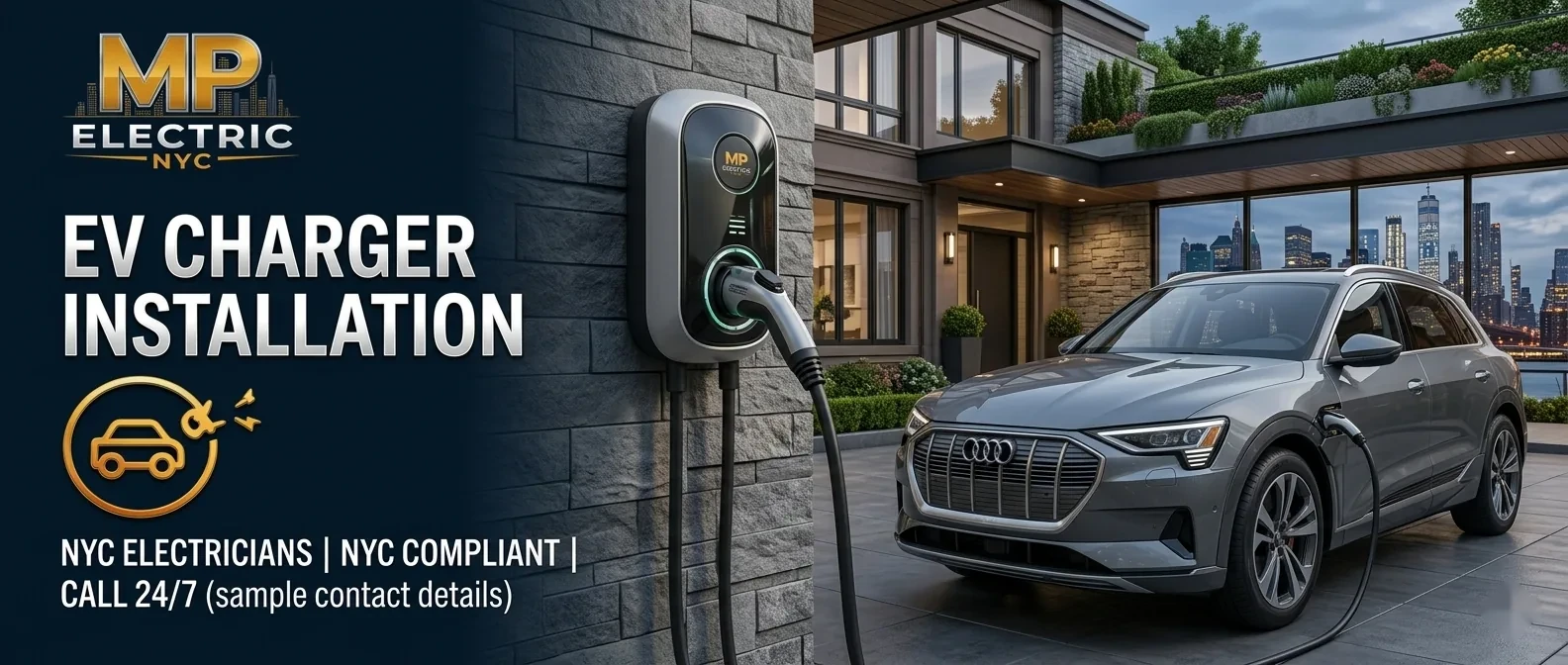
For most NYC homeowners charging daily, hardwired is the safer, cleaner choice — but a plug-in NEMA 14-50 has real advantages for flexibility.
A hardwired charger is permanently connected to the circuit — it handles higher continuous amperage (up to 48–80A), removes the outlet as a failure point, and looks cleaner. A plug-in charger uses a NEMA 14-50 outlet, so you can unplug and take it when you move or swap units easily — but the 2023 NEC requires a GFCI breaker on that outlet (added cost), and cheap outlets have overheated under sustained EV load. For a daily-driver setup you'll keep, hardwired wins on safety; for renters or frequent movers, plug-in wins on flexibility.
Hardwired Charger vs Plug-In (NEMA 14-50): the full comparison
| Factor | Hardwired Charger | Plug-In (NEMA 14-50) |
|---|---|---|
| Max continuous amperage | Up to 48–80A (higher charging speed) | Typically capped at 40A (32A continuous) |
| Safety at sustained load | Highest — no outlet to loosen or overheat | Good if outlet is high-quality; cheap ones overheat |
| 2023 NEC GFCI breaker required | No (protection built into charger) | Yes — adds $150–$250 |
| Portability | Fixed — stays with the home | Unplug and take it when you move |
| Appearance | Cleaner, no visible outlet/plug | Plug and outlet visible |
| Swap/replace unit | Electrician needed | Just unplug the old, plug the new |
| Typical NYC install cost | $450–$1,500 (no outlet/GFCI breaker) | $400–$1,300 + GFCI breaker |
| Best for | Daily drivers, owners staying put | Renters, frequent movers, easy upgrades |
How to choose
✅ Choose Hardwired Charger if…
- You drive daily and want the fastest safe charging
- You own the home and plan to stay
- You want the cleanest look with no visible plug
- You're running 48A+ for a large-battery EV
- You'd rather not deal with GFCI-breaker nuisance trips
✅ Choose Plug-In (NEMA 14-50) if…
- You rent or expect to move and want to take the charger
- You like being able to swap chargers easily
- You want a setup that doubles as a 240V outlet
- Your charger maxes at 40A anyway
- You value flexibility over the last bit of charging speed
The NYC angle
One NYC-specific caution: in older buildings, the NEMA 14-50 outlet is only as safe as its installation and the quality of the receptacle. We've replaced budget outlets that browned and melted under nightly EV load. If you go plug-in, insist on a commercial-grade receptacle and the code-required GFCI breaker — which we install as standard.
For most homeowners we lean toward hardwired because it removes that failure point entirely and supports higher amperage. Either way, we confirm your panel capacity first and walk you through the federal 30C credit (ending June 30, 2026) and ConEd rebates. See pricing on our EV charger cost guide.
Hardwired or plug-in — we'll set it up right.
We confirm your panel capacity, install to current NEC code, handle the permit and incentives, and give you a safe, fast home charging setup either way.
Hardwired Charger vs Plug-In (NEMA 14-50): common questions
Generally yes for sustained daily charging — hardwiring removes the outlet, which is the most common failure point when a cheap receptacle overheats under continuous EV load. Hardwired also supports higher amperage and skips the GFCI-breaker nuisance trips some plug-in setups experience.
The 2023 National Electrical Code requires GFCI protection on NEMA 14-50 outlets used for EV charging, because high continuous current at a plug-in connection carries shock and fire risk. It adds roughly $150–$250 to the job. Hardwired chargers have protection built in and don't need it.
If it's plug-in (NEMA 14-50), yes — just unplug it. That portability is the main reason renters and frequent movers choose plug-in. A hardwired charger stays with the home, though the next owner inherits a clean, capable setup.
They're close. Hardwired runs $450–$1,500 with no outlet or GFCI breaker; plug-in runs $400–$1,300 but adds a $150–$250 GFCI breaker plus a quality outlet. The bigger cost driver for both is distance from the panel and whether you need added capacity.
Most home Level 2 chargers run 32–48A. Plug-in via NEMA 14-50 typically caps at 40A (32A continuous); hardwired supports 48A and beyond for faster charging. We size the circuit to your charger and EV, and confirm your panel can support it.
Related comparisons
Get a free quote anywhere in NYC
Tell us the neighborhood and the job — we'll confirm coverage and give you a written fixed price.