// Compare · Whole-House Surge vs Power-Strip Surge · NYC
Whole-House Surge vs Power-Strip Surge
That power strip behind your TV protects one outlet. A whole-house surge protector guards everything. Here's how they compare — and why the best answer for NYC homes is usually both.
Whole-House Surge
Panel-level — protects the entire home
Power-Strip Surge
Plug-in — protects one outlet's devices
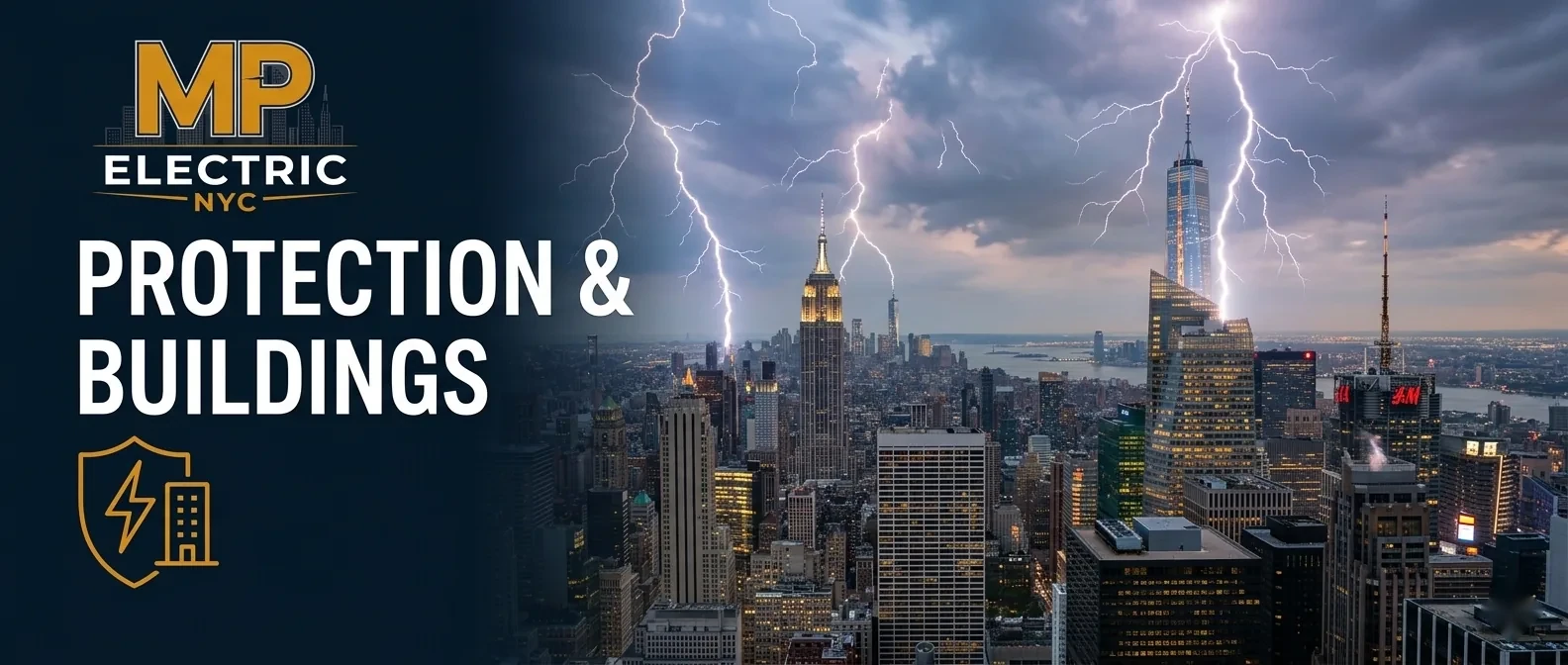
They're layers, not alternatives. Whole-house catches big surges at the panel; power strips protect sensitive electronics at the outlet. Use both.
A whole-house surge protector installs at your electrical panel and stops large surges — from the grid, ConEd switching, or nearby lightning — before they enter your home, protecting hardwired equipment (HVAC, appliances, the panel itself) that a power strip never touches. A power-strip (point-of-use) protector guards the specific electronics plugged into it from smaller residual surges. Neither replaces the other: the recognized best practice is a layered approach — whole-house as the first line, power strips as the last line for your most sensitive gear.
Whole-House Surge vs Power-Strip Surge: the full comparison
| Factor | Whole-House Surge | Power-Strip Surge |
|---|---|---|
| Where it installs | At the electrical panel | Plugged into an outlet |
| What it protects | The entire home, including hardwired equipment | Only devices plugged into it |
| Surge size handled | Large (grid, switching, lightning-adjacent) | Small residual surges |
| Protects HVAC, appliances, panel | Yes | No |
| Protects your TV / computer | Yes (first line) | Yes (last line) |
| Typical NYC cost | $300–$700 installed | $20–$80 each |
| Professional install needed | Yes (at the panel) | No — plug and play |
| Best practice | First layer of defense | Second layer for sensitive gear |
How to choose
✅ Choose Whole-House Surge if…
- You want to protect the whole home, not just a few outlets
- You have expensive hardwired equipment (HVAC, appliances)
- You've experienced surges or live near frequent grid switching
- You're upgrading your panel anyway (easy add-on)
- You want the strongest first line of defense
✅ Choose Power-Strip Surge if…
- You want extra protection for specific sensitive electronics
- You're renting and can't modify the panel
- You need protection now, today, with no install
- You're layering it on top of whole-house protection
- You have a home office or AV setup to safeguard
The NYC angle
NYC homes face surges from more than lightning — grid switching, ConEd equipment operations, and the demands of dense shared infrastructure all send spikes down the line. A power strip behind the TV does nothing for your boiler, refrigerator, or the panel itself.
The smart setup is layered: a whole-house surge protector at the panel (often added during a panel upgrade for minimal extra cost) as your first line, plus quality power strips on your most sensitive electronics as the last line. We install whole-house protection as a standard add-on and will tell you honestly where point-of-use strips are worth it. More in our electrical safety guide.
Protect everything, not just the TV.
We install whole-house surge protection at your panel — often a low-cost add-on to a panel upgrade — and advise where point-of-use strips are worth layering on.
Whole-House Surge vs Power-Strip Surge: common questions
Power strips only protect what's plugged into them — not your HVAC, appliances, or hardwired systems, and they handle only smaller surges. Whole-house protection catches large surges at the panel before they spread. The best practice is both: whole-house as the first line, power strips as the last for sensitive electronics.
Typically $300–$700 installed at the panel, and notably less if added during a panel upgrade since the electrician is already working in the panel. Point-of-use power strips run $20–$80 each. Together they form an affordable layered defense.
Beyond lightning, common causes include grid switching, ConEd equipment operations, large appliances cycling on and off, and the demands of dense shared electrical infrastructure. These everyday surges are exactly what whole-house protection is designed to absorb.
No surge protector fully stops a direct lightning strike — that's an extreme event. But whole-house protection greatly reduces damage from the far more common surges, including lightning-adjacent ones, that occur regularly. It's about probability and protecting against the surges you'll actually face.
No — a power strip only protects devices plugged directly into it. Everything hardwired (HVAC, water heater, appliances, the panel) and every other outlet remains unprotected. Only a panel-level whole-house protector covers the entire home.
Related comparisons
Get a free quote anywhere in NYC
Tell us the neighborhood and the job — we'll confirm coverage and give you a written fixed price.